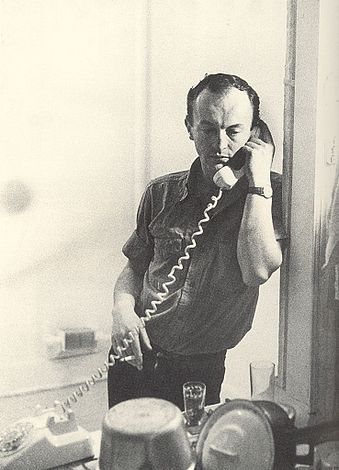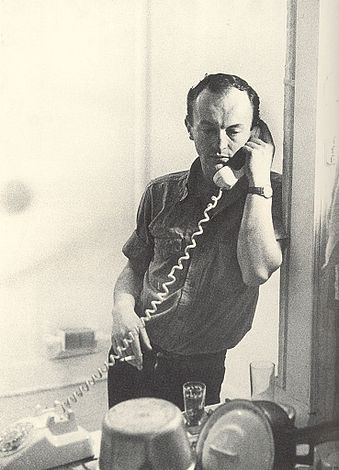
Photo of Frank O’Hara

Frank O’Hara

1 Listeners

Artist Bio

Introduction & Current Status Frank O'Hara might not be topping the Billboard charts today, but his words? They're low-key immortal. This mid-century poet's blend of high art and everyday life resonates now more than ever. Think of him as the OG influencer, capturing those fleeting, chaotic moments of urban existence way before Instagram stories. His work is constantly being rediscovered by new generations finding his poems in anthologies, online, or through cool lit professors. O'Hara's poems have a raw, unfiltered vibe that feels surprisingly current. He's the anti-influencer influencer, serving up realness instead of filtered perfection. Why does O'Hara still matter? Because he reminds us that poetry isn't just for dusty libraries. It's in the coffee shops, the streets, the unexpected encounters that make up our daily grind. He's proof that even the most ordinary day can be a masterpiece waiting to be written. Early Life & Background Frank O'Hara entered the world in 1926, born in Baltimore, Maryland. His childhood was marked by a passion for music. He showed early promise as a pianist – Rachmaninoff was a major obsession. That musicality would later infuse his poetry with a unique sense of rhythm and flow. Growing up, O'Hara hopped around a bit. He spent formative years in Grafton, Massachusetts, and later boarding school. These early experiences helped shape his worldview. It gave him a blend of small-town sensibility and big-city aspirations. While music was his first love, poetry soon elbowed its way into his heart. Discovering the works of poets like Walt Whitman and Arthur Rimbaud ignited a creative fire that would burn throughout his life. It was a sign that his future would be written in verse, not musical notes. Career Beginnings O'Hara's poetic journey really took off when he landed in Cambridge. He enrolled at Harvard University, where he quickly immersed himself in the vibrant literary scene. He hooked up with the Harvard Advocate, solidifying his place among the campus's cool kids. After Harvard, New York City beckoned. O'Hara dove headfirst into the downtown art world. He started working at the Museum of Modern Art (MoMA), where he rubbed shoulders with legendary artists like Jackson Pollock and Willem de Kooning. These encounters shaped his aesthetic and fueled his creative output. His early work experimented with form and content, pushing the boundaries of traditional poetry. He began developing his signature style: conversational, witty, and deeply personal. It was a style that captured the energy of the city and the complexities of human experience. Major Albums & Discography Lunch Poems, published in 1964, is arguably O'Hara's most iconic collection. These poems are like snapshots of his daily life. They are filled with pop culture references, witty observations, and moments of profound introspection. It's a wild ride through the mind of a brilliant and restless soul. Meditations in an Emergency is another cornerstone of O'Hara's work. This collection showcases his ability to blend the personal and the political. It touches on themes of love, loss, and the anxieties of the Cold War era. The poems are raw, honest, and deeply moving. A City Winter and Other Poems offers a glimpse into O'Hara's evolving style. Here, he experiments with different forms and voices. He continues to explore the themes of urban life, love, and art. His collections weren't just books of poems. They were cultural artifacts. They captured the zeitgeist of a generation and cemented O'Hara's place as one of the most important poets of the 20th century. Hit Songs & Signature Tracks While O'Hara didn't drop any chart-topping singles, his poems have become anthems for a generation. The Day Lady Died is a stone-cold classic. It captures the shock and sorrow of hearing about Billie Holiday's death. The poem is a powerful meditation on loss and the enduring power of art. Adieu to Norman, Bon Jour to Joan and Jean-Paul is a more playful, yet equally iconic piece. It's a breezy shout-out to friends and fellow artists. The poem is a celebration of creativity and the bohemian lifestyle. Music is another essential O'Hara poem. It explores the power of music to transport us to other realms. The poem is a testament to the transformative power of art and the human spirit. Don't sleep on On Rachmaninoff's Birthday, a heartfelt tribute to a musical hero. It highlights O'Hara's deep connection to music and its influence on his poetic style. His vivid imagery and rhythmic language truly make this poem sing. A City Winter provides a stark yet beautiful snapshot of urban life, showcasing O'Hara's keen observational skills. Naphtha, with its intriguing title and evocative language, showcases O'Hara's experimental side. Lastly, Sleeping on the Wing offers a dreamlike, surreal experience, further cementing O'Hara's status as a master of poetic imagery. Each poem is a hit in its own right, resonating with readers and solidifying O'Hara's legacy. Collaborations & Features O'Hara's collaborative spirit extended beyond the page. He worked closely with visual artists. He wrote poems inspired by their work and even created collaborative pieces. His friendships with artists like Larry Rivers and Grace Hartigan resulted in groundbreaking works that blurred the lines between poetry and visual art. He also collaborated with musicians. He wrote lyrics for songs and even performed his poetry with musical accompaniment. These collaborations demonstrated his versatility and his willingness to experiment with different artistic forms. He wasn't afraid to push boundaries and challenge conventions. While not collaborations in the traditional sense, O'Hara's influence can be felt in the work of countless artists across different disciplines. His poems have been adapted into films, plays, and musical compositions. His legacy continues to inspire and influence new generations of artists. Awards & Achievements While O'Hara didn't rack up a ton of traditional awards during his lifetime, his impact is undeniable. He received a posthumous National Book Award for his Collected Poems in 1976. This was a major recognition of his contribution to American literature. He was also awarded fellowships from the Guggenheim Foundation and the Ingram Merrill Foundation. These grants provided him with the financial support to continue his writing and artistic pursuits. They acknowledged his talent and potential. His greatest achievement, however, is the enduring relevance of his work. O'Hara's poems continue to be read, studied, and celebrated around the world. He has become a literary icon. His influence can be seen in the work of countless poets and artists. That's a legacy that no award can ever fully capture. Personal Life O'Hara's personal life was as vibrant and complex as his poetry. He was openly gay at a time when it was still taboo. He embraced his identity and wrote about his experiences with honesty and humor. He became a role model for LGBTQ+ writers and artists. He was known for his generosity and his unwavering support of his friends and fellow artists. He was a central figure in the New York art world. He created a community where creativity could flourish. His life was a testament to the power of friendship and the importance of living authentically. Musical Style & Influence O'Hara's style defies easy categorization. He's often associated with the New York School of poetry. This was a group of poets known for their experimental, urban-inspired verse. But O'Hara's work is uniquely his own. It blends elements of modernism, surrealism, and pop art. His poems are characterized by their conversational tone, their use of everyday language, and their willingness to embrace the chaotic and unpredictable nature of life. He drew inspiration from a wide range of sources. These included music, film, painting, and the streets of New York City. O'Hara's influence can be seen in the work of contemporary poets like Eileen Myles and Ron Padgett. His emphasis on personal experience, his playful use of language, and his embrace of popular culture have paved the way for a new generation of writers. He showed them that poetry can be both intellectual and accessible. It can be both serious and fun. Recent Work & What's Next While Frank O'Hara is no longer with us, his work continues to find new audiences. There are constant re-evaluations of his poetry. Scholarly articles explore his themes and techniques. He is often cited as an inspiration for new poets and artists. His poems have found new life on social media platforms like TikTok and Instagram. Short excerpts and interpretations of his work are shared and remixed, introducing his work to a new generation. O'Hara's words are more relevant today than ever before, a testament to his enduring genius.

Popular Albums

Popular Songs

Reviews

Comments

Questions & Answers

Music Awards

0 Total

No Music Awards Found