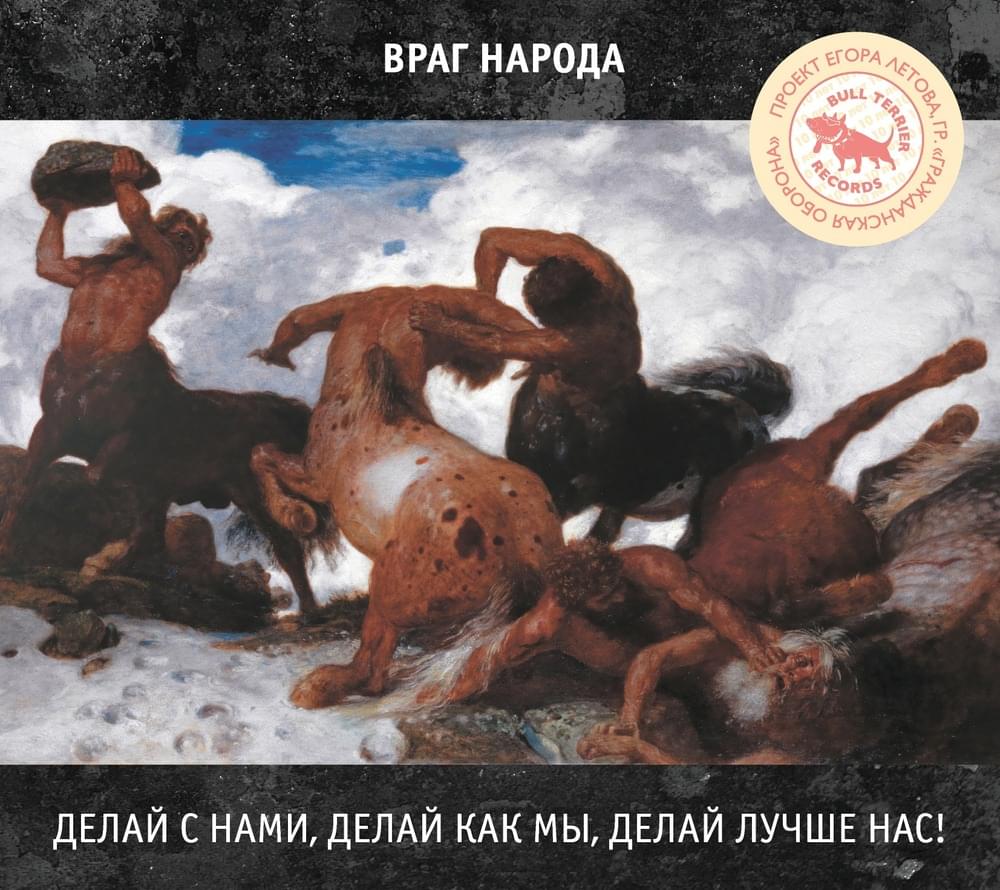

Враг народа (Enemy of the people) (USSR)
1 Listeners
Artist Bio
Introduction & Current Status
Враг народа (Enemy of the people) (USSR), emerging from a time of immense political and social upheaval, remains a fascinating, if complex, subject in the landscape of pop music. Though not currently active in the traditional sense, their legacy lives on through sampled sounds and historical analysis, resonating in unexpected corners of contemporary music. The impact of their work serves as a constant reminder of the intersection between art and ideology.
More than just a musical act, Враг народа (Enemy of the people) (USSR) represented a cultural phenomenon deeply embedded in the Soviet experience. Their music, often subversive and laced with coded messages, became an anthem for those who felt stifled by the system. Though decades have passed, the themes they explored – resistance, identity, and the struggle for individual expression – still hit hard.
While charting contemporary trends isn't exactly relevant for a group from a bygone era, the echoes of their influence can be found in modern protest music and sound collages. Their story stands as a powerful example of how music can both reflect and challenge the status quo.
Early Life & Background
Details surrounding the individual members of Враг народа (Enemy of the people) (USSR) are scarce, shrouded in the mystique of a bygone era and the deliberate obscurity enforced by the Soviet regime. What is known points to a collective of artists, likely from diverse backgrounds within the USSR, united by a shared desire to express themselves through music, despite the inherent risks.
Growing up in the Soviet Union meant a constant barrage of propaganda and state-approved art. Finding authentic voices was a challenge, but also a powerful motivator. It's speculated that early musical influences ranged from traditional folk music to smuggled Western pop and rock records, creating a potent and rebellious cocktail of inspiration.
The socio-political climate of the time was undoubtedly the biggest influence. The constant surveillance, the suppression of dissent, and the ever-present fear of being labeled an "enemy of the people" shaped not only their artistic vision but also their very existence. This environment birthed a sound that was both defiant and deeply melancholic.
Career Beginnings
The formation of Враг народа (Enemy of the people) (USSR) likely involved clandestine meetings and underground performances. In a society where artistic expression was tightly controlled, simply creating music outside the approved channels was an act of rebellion. Early recordings, if they existed, would have been made in secret, using whatever equipment was available.
Word of mouth probably played a crucial role in spreading their music. Imagine grainy cassette tapes being passed from hand to hand, carrying messages of hope and resistance to those who felt isolated. The very act of listening became a form of solidarity.
It's unlikely that Враг народа (Enemy of the people) (USSR) had any official support or mentorship. Their career was forged in the shadows, fueled by the passion of its members and the shared experiences of their audience. The lack of traditional career paths only amplified their message and solidified their status as a counter-cultural force.
Major Albums & Discography
Given the nature of their existence, a traditional discography for Враг народа (Enemy of the people) (USSR) is unlikely. Any albums would have been circulated informally, existing as samizdat recordings rather than officially released products. Compilations of their works, if they surface, are more likely historical artifacts than commercially driven projects.
It's probable that their "albums" were thematic collections of songs, perhaps centered around specific political events or social issues. The sound would likely be raw and unpolished, reflecting the limited resources available and the urgency of their message. Imagine lo-fi recordings layered with subtle critiques of the Soviet system.
These hypothetical albums wouldn't have been judged by typical commercial standards. Their success would have been measured by their ability to resonate with their audience, to provide a voice for the voiceless, and to inspire acts of resistance, however small. The impact of their music transcended mere entertainment; it became a tool for survival.
Hit Songs & Signature Tracks
Due to the underground nature of Враг народа (Enemy of the people) (USSR), pinpointing specific "hit songs" is difficult. However, certain tracks, if they existed, would have gained notoriety through their lyrical content, their catchy melodies, or their ability to capture the zeitgeist of the time. These songs would have become anthems of resistance, sung in hushed tones and shared in secret.
Imagine a song that subtly critiques the cult of personality surrounding Soviet leaders, disguised as a children's rhyme. Or a melancholic ballad about the longing for freedom, masked as a traditional folk song. These are the kinds of tracks that would have resonated deeply with their audience.
The impact of these songs wouldn't have been measured in chart positions or certifications. Their true value lay in their ability to provide solace, to inspire hope, and to connect people who felt alone in their dissent. These songs would have become symbols of resistance, passed down through generations.
Collaborations & Features
Collaborations in the traditional sense were likely limited, given the clandestine nature of their work. However, it's possible that Враг народа (Enemy of the people) (USSR) collaborated with other underground artists, poets, and activists. These collaborations would have been driven by shared ideals and a desire to amplify their message.
Imagine a joint performance with a dissident poet, where music and spoken word intertwined to create a powerful statement against oppression. Or a collaboration with a visual artist, using music to soundtrack an underground exhibition of forbidden art. These are the kinds of collaborations that would have been both risky and incredibly impactful.
The focus wouldn't have been on commercial gain or mainstream recognition. The goal would have been to create a unified front against the oppressive regime, to provide a platform for marginalized voices, and to inspire collective action.
Awards & Achievements
Given their status as an underground and likely suppressed group, Враг народа (Enemy of the people) (USSR) would not have received any official awards or recognition. Their achievements were measured in different terms: the impact they had on their audience, the risks they took to create their music, and the legacy they left behind.
Their greatest achievement was simply surviving and continuing to create music in the face of immense pressure. Their ability to inspire hope and resistance in others was a testament to their artistic vision and their unwavering commitment to their ideals. Their impact transcends any formal accolades.
Recognition, if it came, would have been posthumous or in the form of underground accolades. Their legacy lives on through the stories that are told about them, the influence they had on other artists, and the enduring power of their music.
Personal Life
Details about the personal lives of the members of Враг народа (Enemy of the people) (USSR) are scarce, likely due to the desire to protect themselves and their families from persecution. It's probable that they led double lives, maintaining a facade of conformity while secretly creating and sharing their music.
It's reasonable to assume that their activism extended beyond their music. They may have been involved in other forms of resistance, such as distributing underground literature or organizing protests. Their commitment to their ideals likely permeated every aspect of their lives.
Their story is a testament to the resilience of the human spirit and the power of art to inspire change. Despite the risks and challenges they faced, they persevered in their mission to create music that spoke truth to power.
Musical Style & Influence
Defining the musical style of Враг народа (Enemy of the people) (USSR) requires some imagination, given the limited availability of their work. It's likely that their music was a blend of various genres, reflecting the diverse backgrounds of its members and the influences they absorbed. Elements of folk music, protest songs, and even experimental soundscapes could have been present.
Their influence, while difficult to quantify, is undoubtedly significant. They paved the way for future generations of dissident artists, demonstrating the power of music to challenge oppressive regimes. Their legacy lives on in the work of contemporary musicians who use their art to speak out against injustice.
The cultural impact of Враг народа (Enemy of the people) (USSR) extends beyond the realm of music. They represent a symbol of resistance, a reminder that even in the darkest of times, art can provide hope and inspiration. Their story serves as a powerful lesson about the importance of freedom of expression and the courage to stand up for what you believe in.
Recent Work & What's Next
As a historical entity, Враг народа (Enemy of the people) (USSR) isn't actively producing "recent work." However, their legacy continues to be explored and reinterpreted by contemporary artists and historians. Documentaries, academic papers, and musical tributes keep their story alive.
Their music, if rediscovered or reinterpreted, could find a new audience in the digital age. The themes they explored – resistance, identity, and the struggle for individual expression – are as relevant today as they were during the Soviet era. Their message continues to resonate with those who feel marginalized or oppressed.
While there may not be any upcoming albums or tours, the story of Враг народа (Enemy of the people) (USSR) remains a powerful and inspiring example of the transformative power of music. Their legacy serves as a reminder that even in the face of adversity, art can be a force for change.
Popular Albums
Popular Songs
| Track Number | Song | Release Date | Album |
|---|---|---|---|
| 01 | 70 лет октября | Apr 1, 1988 | Делай с нами, делай как мы, делай лучше нас! (Mach mit, mach nach, mach besser!) |
| 02 | Человек - это гордо звучит (THSP) | Apr 1, 1988 | Делай с нами, делай как мы, делай лучше нас! (Mach mit, mach nach, mach besser!) |
| 03 | Поперёк (Across) | Jan 1, 2022 | Делай с нами, делай как мы, делай лучше нас! (Mach mit, mach nach, mach besser!) |
| 04 | Самоотвод (Recusal) | Jan 1, 2022 | Делай с нами, делай как мы, делай лучше нас! (Mach mit, mach nach, mach besser!) |
Reviews
Comments
Questions & Answers
Music Awards
0 Total
No Music Awards Found