Introduction & Current Status
Edgard Varèse isn't exactly topping the charts in 2024. He's been pushing sonic boundaries from the grave, influencing everyone from experimental electronic artists to film score composers crafting dystopian soundscapes. Think of him as the patron saint of organized sound and noise – the dude who was doing glitch before glitch was cool.
Varèse's impact is less about radio play and more about foundational influence. His pioneering work with electronic sounds and percussion continues to resonate, popping up in contemporary music, film, and art installations. He's the avant-garde ancestor of your favorite experimental producer, whether they know it or not.
His music isn't background noise; it's an active experience. Varèse challenges listeners to reconsider what music can be. In a world saturated with predictable pop formulas, his work remains a radical and relevant statement, proving that true innovation transcends time.
Early Life & Background
Born in Paris in 1883, Edgard Varèse had a childhood that was, let's say, not exactly harmonious. Family tensions and a generally unhappy home life pushed him towards finding solace in less conventional outlets. He bounced around between relatives and cities, a pattern that seemed to fuel his restless artistic spirit.
Even early on, Varèse was drawn to the raw power of sound. He dabbled in math and science, interests that later shaped his approach to composition, viewing sound as a physical phenomenon to be manipulated and sculpted. This wasn't just about melodies; it was about the architecture of noise.
Though he initially studied engineering, music always called to him. He enrolled at the Schola Cantorum and later the Paris Conservatory, studying with composers like Vincent d'Indy. However, the traditional academic environment never quite fit his avant-garde sensibilities. He was too busy dreaming up futuristic soundscapes to be bothered with dusty old rules.
Career Beginnings
Varèse's early career was marked by a restless search for new sonic territories. He wrote music that was immediately controversial, pushing the boundaries of what was considered acceptable in classical circles. Performances of his early works often sparked outrage and bewilderment – a sign he was doing something right.
He spent time in Berlin, where he met luminaries like Richard Strauss and Ferruccio Busoni, absorbing new ideas and approaches to composition. But Europe felt too constrained for his ambitions. He craved a place where he could truly unleash his sonic visions.
In 1915, Varèse made the bold move to New York City, a hub of innovation and artistic experimentation. This was the turning point. He co-founded the New Symphony Orchestra, dedicated to performing modern music, and began to develop his signature style – a brutal, exhilarating blend of dissonance, percussion, and electronic sounds.
Major Albums & Discography
Varèse's discography isn't extensive, but each piece is a monumental statement. He wasn't about churning out albums; he was about crafting singular, groundbreaking works. Consider each composition a meticulously engineered sonic sculpture.
One of his most important works is "Amériques" (1921, revised 1927). This orchestral piece is a wild, chaotic portrait of New York City, a sonic representation of the city's energy, noise, and relentless pace. It's a massive, sprawling composition that showcases Varèse's love for percussion and his willingness to embrace dissonance.
"Arcana" (1927) takes this approach even further, creating a sonic landscape that feels both ancient and futuristic. The piece is full of clashing sounds and rhythmic complexities, demanding active listening and rewarding those willing to dive into its depths. It's high-key intimidating but also pretty damn cool.
Later in life, he produced "Déserts" (1954), which ingeniously combined orchestral instruments with electronic sounds played back from tape. This foreshadowed much of the electronic music to come. And his final completed work, "Nocturnal" (1961), set to text by Anaïs Nin, is a haunting and evocative piece that showcases his enduring fascination with the power of sound. His albums are truly something else, even if there aren't any available to link to here!
Hit Songs & Signature Tracks
Varèse wasn't exactly a singles artist. He didn't aim for the Billboard charts. His compositions were more like sonic manifestos, challenging listeners to rethink their understanding of music. Each piece is a journey, not a catchy three-minute tune.
That said, certain pieces stand out as particularly representative of his unique approach. "Ionisation" (1931) is considered a landmark work – scored entirely for percussion instruments. It's a raw, visceral exploration of rhythm and texture, demonstrating the expressive potential of sounds beyond traditional melody and harmony.
"Poème électronique" (1958) is another key work. Created for the Philips Pavilion at the Brussels World's Fair, it's a groundbreaking example of spatial sound design, combining electronic sounds with visual projections. Imagine being immersed in a swirling vortex of noise and light – that was the experience Varèse created.
And his piece "Density 21.5" (1936) for solo flute is a deceptively simple work that explores the instrument's sonic possibilities in a totally fresh way. It's a showcase for both the performer's virtuosity and Varèse's ability to find new sounds in unexpected places. These works cemented his legacy, even if we can't link to them directly right now.
Collaborations & Features
Varèse's collaborations were less about traditional partnerships and more about inspiring others through his innovative ideas. While he didn't churn out collab tracks with other musicians in the conventional sense, his influence rippled through various artistic circles.
He worked closely with architects and filmmakers, exploring the relationship between sound and space. His "Poème électronique," for example, was a collaboration with architect Le Corbusier, creating a multimedia experience that pushed the boundaries of art and technology.
Varèse's impact can be felt in the work of countless composers and musicians who followed in his footsteps. From minimalist composers like Steve Reich and Philip Glass to experimental electronic artists like Aphex Twin, his influence is undeniable. He's the unsung hero of the avant-garde.
Awards & Achievements
Varèse's awards and achievements are less about mainstream accolades and more about recognition from the avant-garde community. He wasn't chasing Grammy Awards; he was pushing the boundaries of musical expression.
He received honorary doctorates from several universities, recognizing his contributions to music and his pioneering spirit. He was also awarded the National Medal of Arts in 1963, a testament to his lasting impact on American culture. Not too shabby.
Varèse's greatest achievement, however, is his lasting legacy. He redefined what music could be, paving the way for future generations of artists to experiment with sound and technology. He's the reason your favorite experimental artist can even exist.
Personal Life
Varèse's personal life was as unconventional as his music. He married twice, and his relationships were often tumultuous. He was a passionate and driven individual, fully committed to his artistic vision, which sometimes made it difficult to navigate the everyday realities of life.
He was also known for his sharp wit and uncompromising personality. He didn't suffer fools gladly and was always willing to defend his artistic principles. This made him a controversial figure at times, but it also earned him the respect of those who understood his genius.
Musical Style & Influence
Varèse's musical style defies easy categorization. He's often described as an avant-garde composer, but that label doesn't quite capture the full scope of his work. He was a sonic sculptor, a master of organized sound, and a pioneer of electronic music.
His music is characterized by its dissonance, rhythmic complexity, and use of unconventional instruments. He embraced noise and found beauty in sounds that others dismissed as unpleasant. He was also deeply interested in the spatial aspects of sound, exploring how music could fill and shape a physical environment.
Varèse's influence is vast and far-reaching. He inspired countless composers, musicians, and artists across genres. He's the godfather of experimental music, the patron saint of noise, and the reason why your favorite electronic artist can make those weird and wonderful sounds. He's low-key iconic.
Recent Work & What's Next
Edgard Varèse passed away in 1965, but his music continues to inspire and challenge listeners today. His compositions are performed by orchestras and ensembles around the world, and his ideas continue to resonate with contemporary artists.
While there won't be any new releases from Varèse himself, his legacy lives on through the countless musicians and artists who have been influenced by his work. He's a timeless figure whose music will continue to push the boundaries of sonic expression for generations to come.
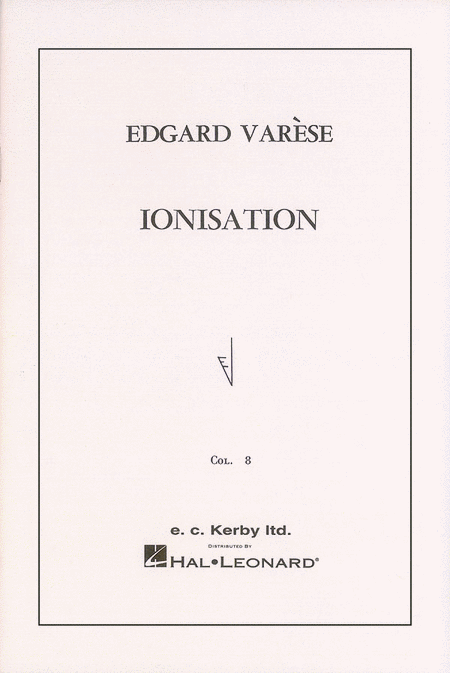 Ionisation
 La Croix du Sud