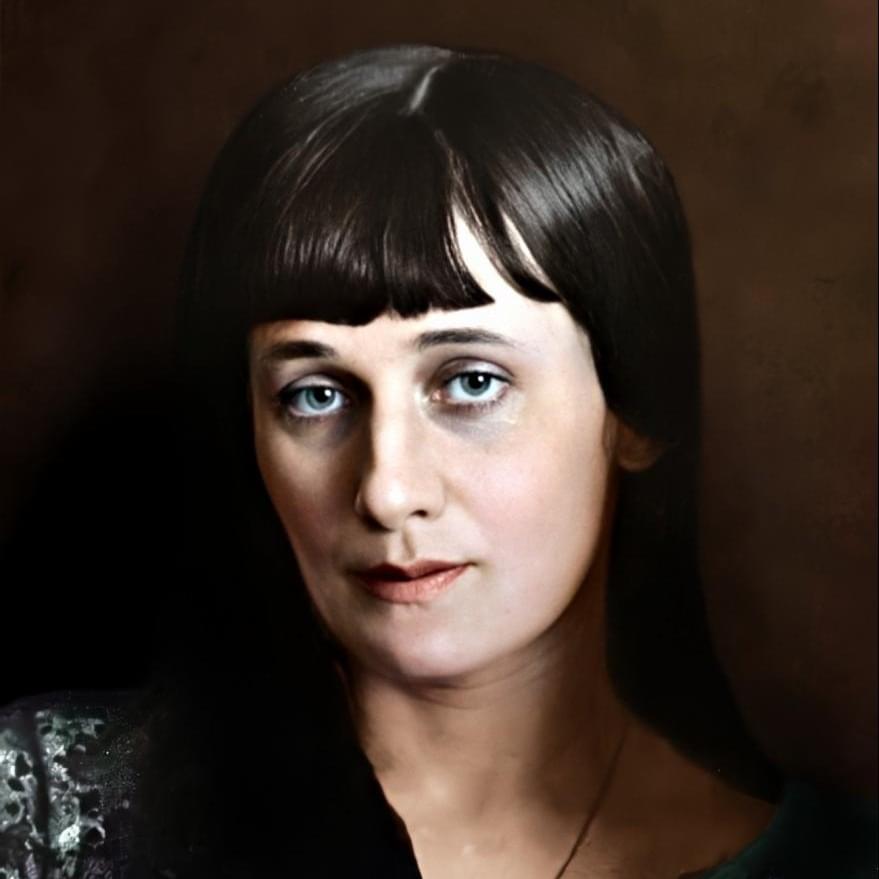
Introduction & Current Status
Anna Akhmatova isn't just a poet; she's a whole mood. Even decades after her death, the Russian literary icon's verses still resonate with anyone who's ever felt the sting of heartbreak, the weight of history, or the quiet defiance of the human spirit. She's trending for all the right reasons. Her unflinching portrayals of love, loss, and political turmoil continue to find new audiences, proving that raw emotion transcends time.
Akhmatova's influence on modern literature is undeniable. She's the blueprint for poets who dare to be vulnerable and vocal. Her works are constantly being rediscovered and reinterpreted in contemporary art, music, and film, solidifying her place as a forever icon. She's not just in the history books; she's in the cultural bloodstream.
Early Life & Background
Born Anna Andreyevna Gorenko in 1889 near Odessa, Ukraine, Akhmatova's early life was steeped in privilege and intellectual curiosity. Her father was a naval engineer, and her mother came from a noble family. She spent her childhood in Tsarskoye Selo, near St. Petersburg, a town that was basically the VIP lounge for Russian poets.
Her family background was definitely extra. She was exposed to literature and the arts from a young age, which makes sense considering her future career. She adopted the pen name Akhmatova, reportedly inspired by her Tatar ancestry, adding a touch of mystery and rebellion to her persona. This name change alone showed she was ready to forge her own path.
Career Beginnings
Akhmatova's poetic journey began in her teens. She started publishing poems in literary magazines, quickly gaining attention for her unique voice and emotional honesty. Her early work explored themes of love, loss, and the complexities of human relationships. Basically, she was writing bangers before bangers were even a thing.
Her involvement in the Acmeist movement, a literary group that rejected the symbolism of the previous generation, helped define her style. This movement emphasized clarity, precision, and a focus on the tangible world. It was a squad of literary rule-breakers, and Akhmatova was their queen. She quickly became a central figure in the Russian literary scene, captivating audiences with her lyrical intensity.
Major Albums & Discography
While Akhmatova didn't drop albums in the traditional sense, her collections of poetry were basically concept albums about the human condition. "Evening" (1912) and "Rosary" (1914) established her as a major voice, exploring themes of love, loss, and the complexities of relationships. These collections were like her debut mixtapes, showcasing her raw talent and emotional depth.
Her later work, including "Requiem," became iconic, particularly Реквием (Requiem). This powerful poem cycle chronicled the suffering of the Russian people under Stalinist repression. It's a heavy listen, but a crucial one for understanding the 20th century. Her work on the "Трибьют Анны Ахматовой: «Я — голос ваш» (AAT)" album Трибьют Анны Ахматовой: «Я — голос ваш» (AAT) only cemented her legacy.
Akhmatova's discography is a testament to her resilience and artistic integrity. She wasn't afraid to tackle tough subjects or experiment with different forms. She's a whole syllabus in one poet.
Hit Songs & Signature Tracks
Akhmatova's "hit songs" are her most famous poems, the ones that everyone knows and loves (or at least recognizes). Песня последней встречи (The song of the last meeting) is a certified classic, capturing the bittersweet pain of farewells. It's the kind of poem that hits you right in the feels, no matter how many times you've heard it.
21. Ночь. Понедельник (21. Night. Monday) is another banger. It encapsulates the feeling of being trapped in a cycle of despair. Then there's Вечером (In the evening), a snapshot of urban loneliness that still feels relevant today. Дверь полуоткрыта (The door is half open) is another notable track, showcasing her ability to evoke complex emotions with simple imagery.
And let's not forget Ты письмо моё, милый, не комкай (You are my letter, dear, do not crumple it), a plea for understanding and compassion. These poems aren't just words on a page; they're emotional experiences. Her track, Ты выдумал меня (You Made Me Up), is another example of her introspection.
Akhmatova's verses are the ultimate mood music for anyone going through it. Her influence is undeniable and everlasting. Don't sleep on Приходи на меня посмотреть (Come and see me) and И мальчик, что играет на волынке (And the boy who plays the bagpipes). Finally, Вот это я тебе (Here I am for you) completes her discography.
Collaborations & Features
While Akhmatova wasn't exactly dropping collab albums with other poets, her work was deeply intertwined with the literary scene of her time. She was part of a vibrant community of writers, artists, and intellectuals who influenced each other's work. Her friendships and rivalries with other poets shaped her artistic development and her legacy.
She collaborated with composers who set her poems to music, creating a unique fusion of poetry and song. These collaborations brought her work to a wider audience and cemented her place in Russian cultural history. She may not have been doing features on SoundCloud, but her influence on other artists is undeniable.
Awards & Achievements
Akhmatova's awards and achievements are a testament to her enduring impact on literature and culture. She was nominated for the Nobel Prize in Literature multiple times, although she never won. Still, those nominations alone speak volumes about her talent and influence.
She received honorary degrees from Oxford University and the University of Catania, recognizing her contributions to world literature. Her poems have been translated into countless languages and are studied in schools and universities around the globe. She's basically a literary rockstar, even if she didn't get all the trophies.
Personal Life
Akhmatova's personal life was as dramatic and turbulent as her poetry. She was married three times, and her relationships were often marked by passion, heartbreak, and political turmoil. Her first husband, Nikolai Gumilev, was a fellow poet who was later executed by the Bolsheviks. This event had a profound impact on her life and work.
She faced immense personal hardship during the Stalinist era. Her son, Lev Gumilev, was arrested and imprisoned for years, and she lived under constant surveillance and threat of persecution. Despite these challenges, she remained true to her artistic vision and continued to write poems that spoke truth to power. She's the definition of resilience.
Musical Style & Influence
Akhmatova's musical style is best described as lyrical, emotional, and deeply personal. Her poems are characterized by their simplicity, clarity, and emotional honesty. She wrote about love, loss, grief, and the complexities of human relationships with unflinching candor. She was basically the original sad girl, but in a literary way.
Her work influenced generations of poets and writers, both in Russia and around the world. She paved the way for female voices in literature, inspiring women to write about their experiences with honesty and vulnerability. Her legacy continues to inspire artists today. She's a literary OG.
Recent Work & What's Next
While Akhmatova passed away in 1966, her work continues to be celebrated and reinterpreted in contemporary art and culture. New translations of her poems are constantly being published, and her life story has been the subject of numerous biographies and films. She's not dropping any new albums, but her legacy is forever.
Her poems are still relevant and powerful, speaking to the universal human experiences of love, loss, and resilience. She's a timeless artist whose work will continue to inspire and challenge readers for generations to come. Akhmatova's impact is forever.